Osamu Dazai - Schoolgirl (& other stories)
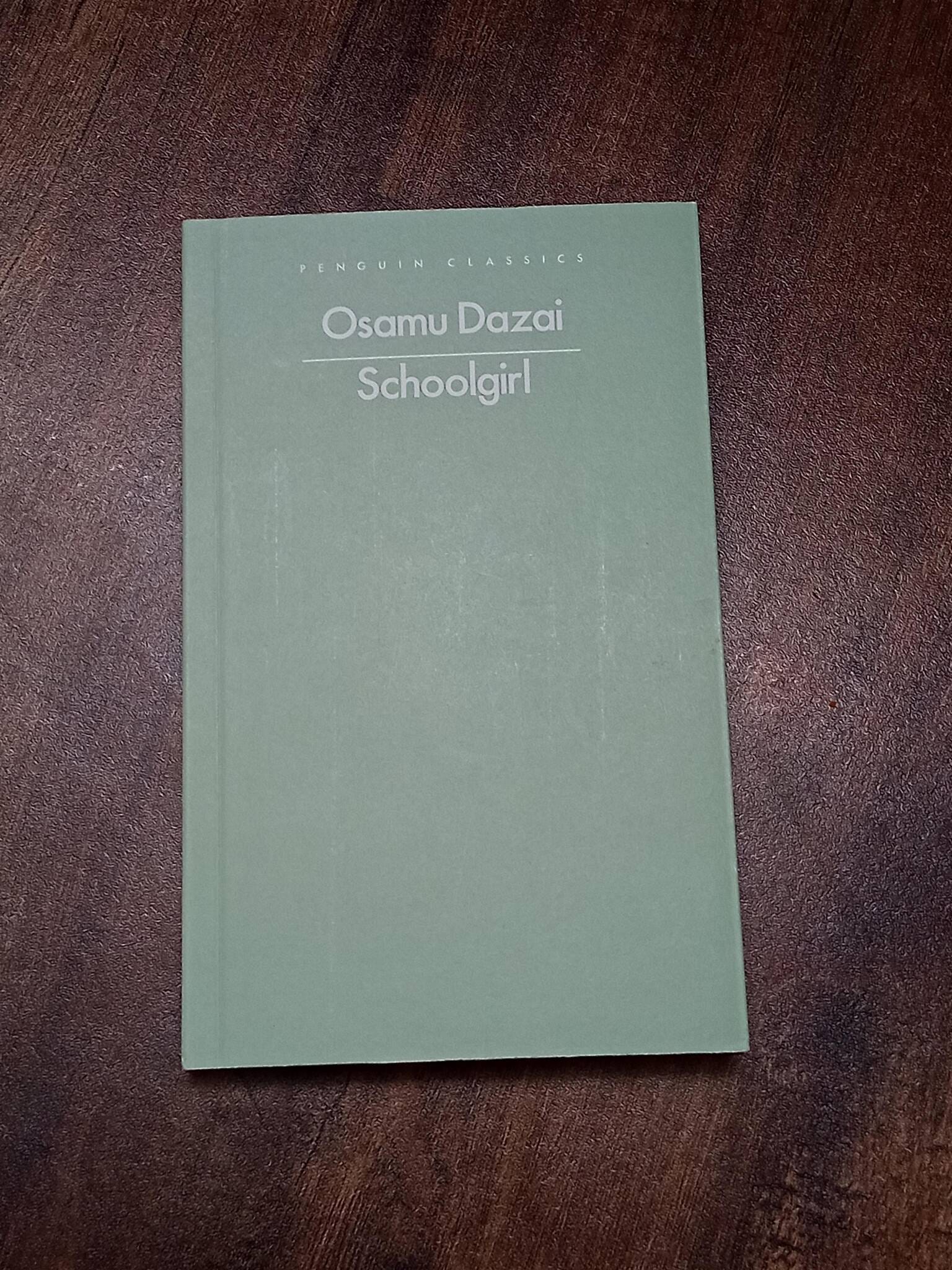
3 weeks back I hadn't even heard the name of Osamu Dazai. I was on a trip and in a bookstore, with the instructions by my lady to find No Longer Human by Dazai. Having heard this name for the first time and no clue as to which section of that humongous bookstore I should even find that book in, I calmly approached one of the store staff, who quickly found the said book right on the pile in front of the entrance.
If this author gets his books on the entrance, he surely must be famous enough, right? Looking around for more books by this author, I ended up buying No Longer Human (+ The Setting Sun) and Schoolgirl (+5 more short stories).
I kept No Longer Human for reading at a later time. I picked up Schoolgirl thinking it would be a light read.
The book has 6 short stories:
- Schoolgirl
- Lantern
- Skin and Psyche
- Grasshopper
- 8 December
- Waiting
I will not be describing all the stories, for the author (and translator) have done a great job composing them and you better read the original text.
I started reading Lantern, since Schoolgirl takes up almost half the book and I didn't want a longer read just before bed. Coincidentally, Lantern was the most happening story in this book, despite it being very still in its own right. I say "happening" because the other stories have even less events that happen. The text is largely the narrator's evaluation of what is happening around them, often in a static frame.
Lantern describes a mental setting that many of us might relate to. The narrator has little to look forward and nothing to be proud of. She plots an act in good faith, but not necessarily good ethics and ends up failing the only person she did it for. That is situated very close to perpetual fears of mistakenly crossing into the forbidden. She doesn't mentally give up, until the very protagonist of her inspiration shows dejection in her morality. The story works its way, bringing the narrator back to the state she started off from - happiness under a little lantern. It may represent a fall back to square one, where you are content in your attempt and that contentment alights happiness in whatever little you have.
That was my first story, of the six brilliant stories, all written from a female perspective to this changing world. Next read was Skin and Psyche, which I shall refrain from giving thoughts upon, for I'm yet to completely grasp the meaning Dazai might've wanted to put through.
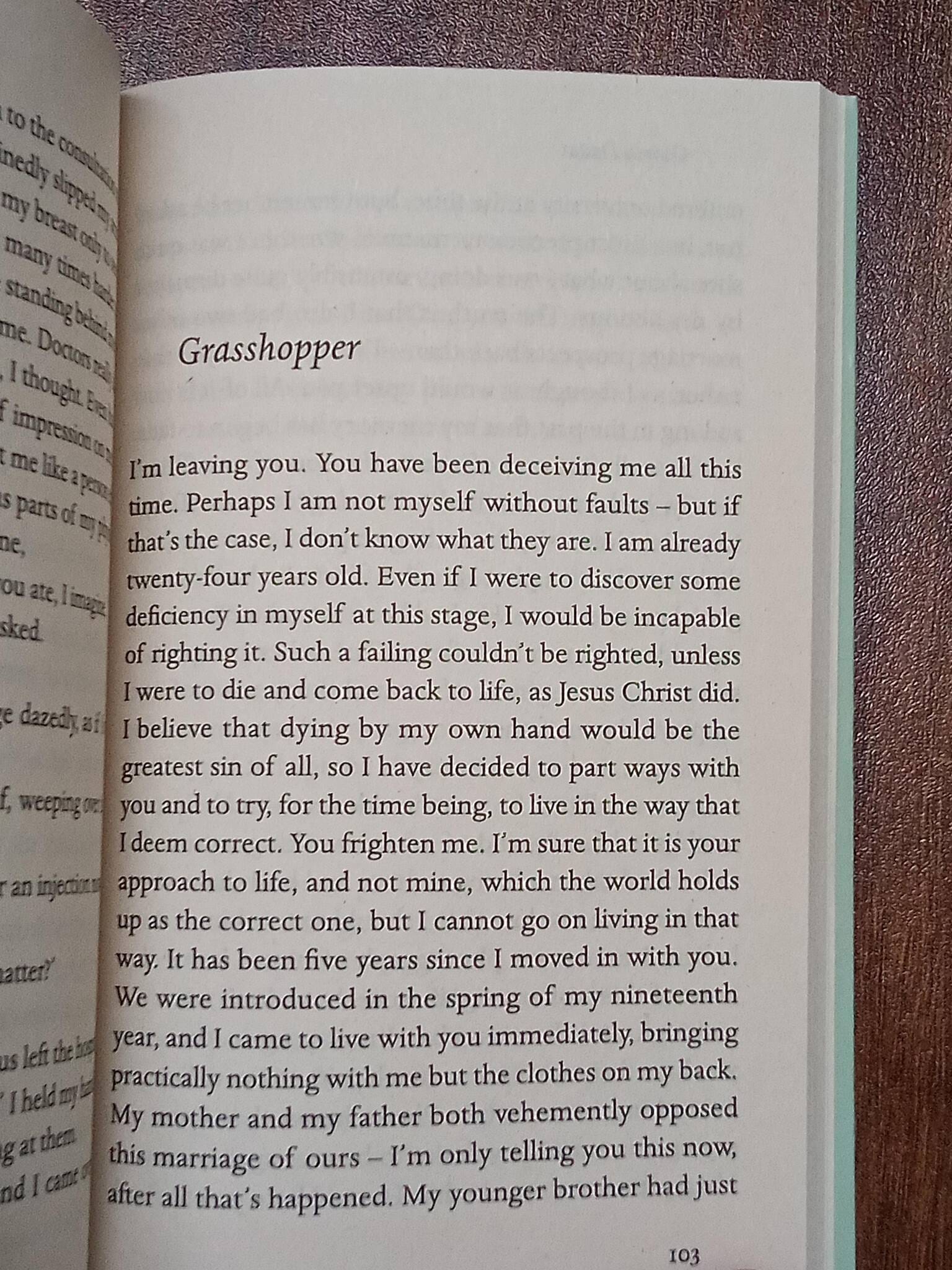
Grasshopper was not an easy read, but easy to understand for sure. I particularly liked how bluntly it starts off with a declaration of separation. It is a farewell letter to her husband who has distanced himself from the emotional aspect of being a husband. I don't find the story surprising per se. But the precision with which it has been conveyed leaves little to be desired for.
Going beyond just the substance of these six stories, I think Dazai has done a marvelous job putting forth these observations and feelings from a female perspective in the era. These stories don't simply narrate events; on the contrary, I found them rather still, or in other words, lacking events. Quite often they give an image of the narrator floating around in a frozen world, giving their observations. Dazai moves ahead of the narration and provides an enriching reflection of society itself. A narration of daily happenings in a poor Japanese household on the very day the country officially declared war against United States and Britain brings together a contradiction that we live through even today. There are unique reflections of what is expected from a person (especially women) in the era.
There are also commentary on both society and self, that come not from a state of being, but from the process of being in a state. Take for example this little remark to a piece of harmless flattery:
Do the people of the world have to go about their whole lives greeting each other so stiffly, with such wariness, so that they end up exhausted with one another? - Waiting
Or a longer monologue by a lady unable to face her husband in her skin:
I didn't want him to see. I was ugly to begin with, but now, with my skin festering like this, I had not a single saving grace. I was dirt. I was a mound of rubbish. Even he would be at a loss for how to comfort me in this state. Besides, I didn't want to be comforted. If he could still stream me kindly with a body like this one, then I had nothing but contempt for him. I didn't want his kindness. I wished to be rid of him, then and there. I didn't want him to be nice to me. I didn't want him to look at me, to be by my side...
... I should never have lived to twenty-eight. I wished that I'd never recovered from the pneumonia I caught in the winter of my nineteenth year, wished that I'd drawn my last breath then and there. - Skin and Psyche
Part of me thinks this allusion to dejection from human relationships reflect Dazai's state of being, as I got to know soon after reading Lantern, that he made multiple (failed) attempts to take his life. I can only guess that his individual state of mind highly influenced the manner and style in which his writings came out to be. A vivid sense of stillness that has colorful depth woven into every seam. I've read more than a few thrillers. These six stories were the opposite of a fast paced thriller. A lot is conveyed through the lack of happenings.
To end with, I think the beauty of these stories lie in how the ordinary is tied up in the fast changing Japanese society of mid 1900s. It describes both the people and society, without being a narration about neither.
I secretly love the unusual parts of myself, and I want to cherish them, but I'm scared of manifesting them as something indisputably mine. - Schoolgirl

